


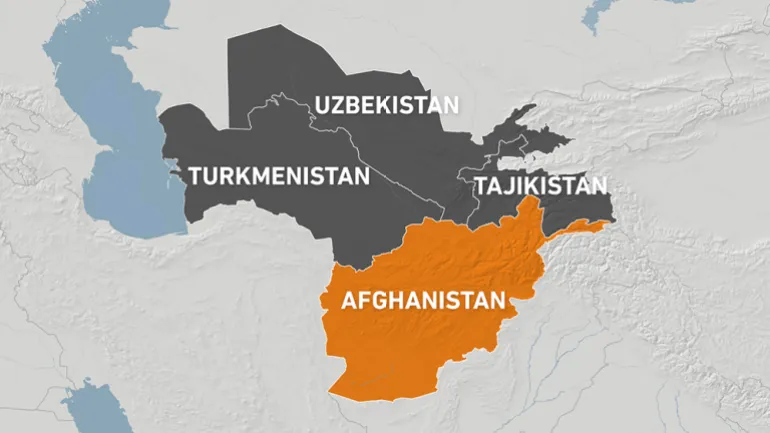
Afghanistan’s relations with Central Asian states—Uzbekistan, Turkmenistan, and Tajikistan—have become a critical part of its regional diplomacy under Taliban rule. These borders shape Afghanistan’s trade, energy access, security environment, and regional connectivity.
Historical and Strategic Importance of the Northern Borders
Afghanistan’s northern frontier connects it to vital economic and energy corridors.
Gateway to Central Asia and Eurasia
The northern borders serve as Afghanistan’s link to regional markets and transport routes.
Importance for trade, electricity, and transit revenues
These corridors remain essential for Afghanistan’s economic survival.
Afghanistan–Uzbekistan Border Dynamics
Uzbekistan maintains a pragmatic approach toward the Taliban.
Focus on trade, electricity exports, and railway corridors
Uzbekistan supplies significant electricity to northern Afghanistan.
Expansion of the Hairatan–Mazar Railway
Talks continue on extending this line deeper into Afghanistan to boost regional connectivity.
Afghanistan–Turkmenistan Relations
Turkmenistan and the Taliban prioritize energy cooperation.
TAPI Pipeline and electricity projects
Turkmenistan hopes to move forward with the TAPI gas pipeline through Herat and Kandahar.
Cross-border trade through Torghundi
Trade has remained stable, making Turkmenistan one of Afghanistan’s key economic partners.
Afghanistan–Tajikistan Border Tensions
Tajikistan has taken a harder political stance on the Taliban.
Concerns over militant groups along the border
Dushanbe fears the presence of groups hostile to Tajikistan among Taliban ranks.
Limited cooperation and frequent political friction
This border remains the most tense among Afghanistan’s northern neighbors.
Security Challenges Along the Northern Frontier
Security concerns continue to shape regional calculations.
ISIS-K mobility and militant networks
Northern Afghanistan has seen activity from groups using remote border regions.
Central Asian governments coordinate quietly with the Taliban
Security talks occur, though formal agreements remain limited.
Economic Corridors and Regional Integration
Central Asia seeks stability in Afghanistan to unlock regional connectivity.
Railways, energy lines, and transport routes
Integration creates shared economic incentives.
Afghanistan’s position as a transit hub
The Taliban hope regional trade will strengthen economic independence.
Diplomatic Outlook
Afghanistan’s relations with Central Asia balance between cooperation and caution.
Uzbekistan and Turkmenistan engage pragmatically
They prioritize economic interests over political recognition.
Tajikistan remains skeptical
Political tensions prevent deeper partnership.
Long-Term Impact
The future of Afghanistan’s northern diplomacy depends on stability.
Regional projects offer major economic opportunities
If security improves, Central Asia may deepen engagement.
The Taliban’s regional role continues to evolve
Northern borders will remain key to Afghanistan’s geopolitical identity.