


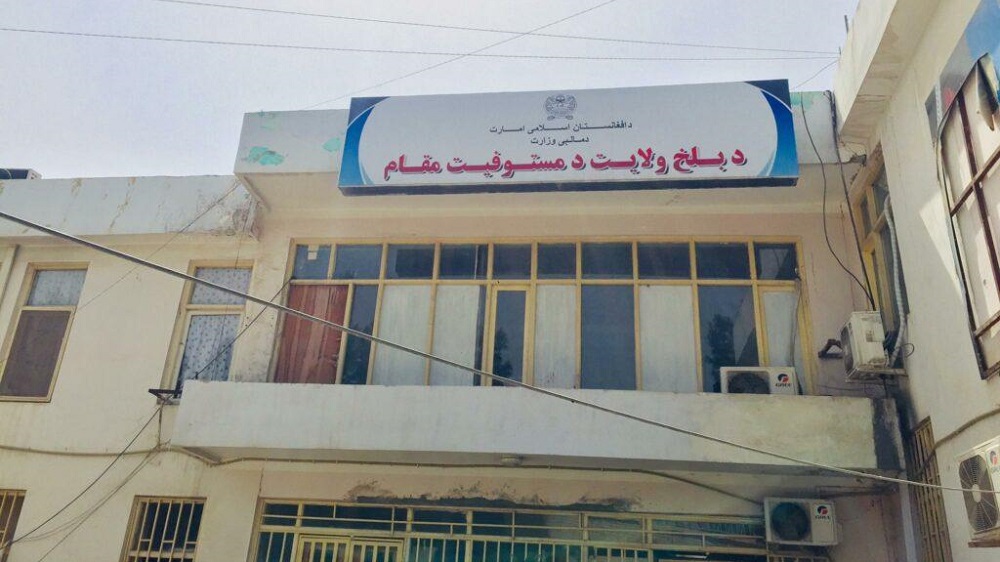
In Balkh, paperwork is no longer just paperwork. For traders and residents dealing with the provincial Mustofiat, routine financial procedures have increasingly become a test of patience, connections, and unofficial payments.
Over the past months, traders, former government employees, and frequent visitors to the Balkh Mustofiat describe the same pattern: files that should move in days remain stalled for weeks. Questions go unanswered. Then, after a quiet conversation and an unofficial payment, the process suddenly resumes.
Those familiar with the system say corruption inside the Mustofiat is no longer random or individual. It follows an internal logic. Different services carry different informal expectations, understood but never written down. Tax clearances, commercial certifications, and financial approvals each come with their own price.
Several sources point to the growing influence of Taliban officials transferred from Helmand province who now occupy sensitive financial positions. Their presence has reshaped decision-making inside the office, weakening oversight and discouraging internal dissent. Local staff say complaints are quietly sidelined, while those who raise concerns risk being labeled uncooperative or disloyal.
This reality stands in contrast to the Taliban’s public claims of eliminating corruption. In Balkh, corruption appears to have adapted rather than disappeared—becoming less visible, more centralized, and harder to challenge.
Economists warn that such practices undermine trust, drive investment underground, and weaken the local economy. Balkh, once a major commercial hub in northern Afghanistan, is already showing signs of economic fatigue as traders reconsider the cost of doing business.
Taliban authorities have not publicly addressed these allegations. Yet the questions raised by those affected remain unresolved. Why are key financial decisions concentrated within a small circle? Why do complaints fail while payments succeed? And in a system that claims transparency, where does the unofficial money collected through intermediaries ultimately go?
What is unfolding inside the Balkh Mustofiat may not be an isolated case. It reflects a broader challenge within Taliban governance, where formal rules exist but informal networks determine outcomes. If left unexamined, Balkh could prove to be an early warning rather than an exception.