


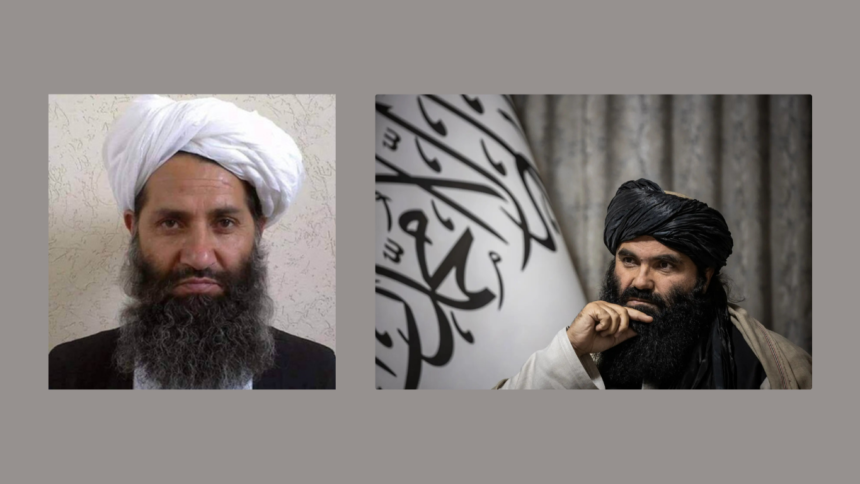
Taliban internal power dynamics in Kandahar are increasingly defining how power is structured and exercised across Afghanistan. Sirajuddin Haqqani’s presence in Kandahar is not routine—it reflects internal negotiation within the Taliban’s core leadership.
Kandahar functions as the ideological center under Hibatullah Akhundzada, where key policy boundaries are set. Movement toward this center is not symbolic; it indicates alignment-seeking within a system where authority is centralized but layered.
Taliban Internal Power Dynamics in Kandahar
The timing aligns with visible divergence between Kabul-based governance actors and Kandahar’s clerical authority. Haqqani has previously operated with relative autonomy, particularly in security and administrative matters. His engagement in Kandahar suggests an effort to recalibrate influence within the Taliban structure.
These developments show how Taliban internal power dynamics in Kandahar are shaping decisions beyond public visibility. This tension connects with broader shifts in
Taliban media strategy and messaging control,
where communication increasingly reflects internal hierarchy rather than unified governance.
Governance vs Ideology
Authority inside the Taliban is not institutional. It is relational and ideological. Kandahar defines legitimacy, while Kabul manages execution. When these layers diverge, resolution occurs through direct engagement rather than formal mechanisms.
The current situation cannot be understood without analyzing Taliban internal power dynamics in Kandahar and their influence on governance. These internal shifts are also shaped by regional pressure, particularly within
Iran–Afghanistan relations and regional influence,
where external actors indirectly affect internal calculations.
This internal positioning reflects a broader structural reality. Governance is not driven by formal institutions but by layered authority, where ideological legitimacy and operational control do not always align. Kandahar represents authority, while Kabul represents constrained execution.
As pressure increases, Taliban internal power dynamics in Kandahar will continue to determine policy direction. Haqqani’s position places him between operational demands and ideological constraints, highlighting the limits of centralized control.
The outcome remains uncertain. Taliban decision-making does not produce visible compromise. It produces directives shaped within closed structures. What can be observed is positioning rather than transformation.
This reflects a broader pattern in
Afghanistan governance under Taliban leadership,
where policy outcomes are defined by internal balance rather than institutional process.
This is a phase of internal adjustment, not systemic change.