


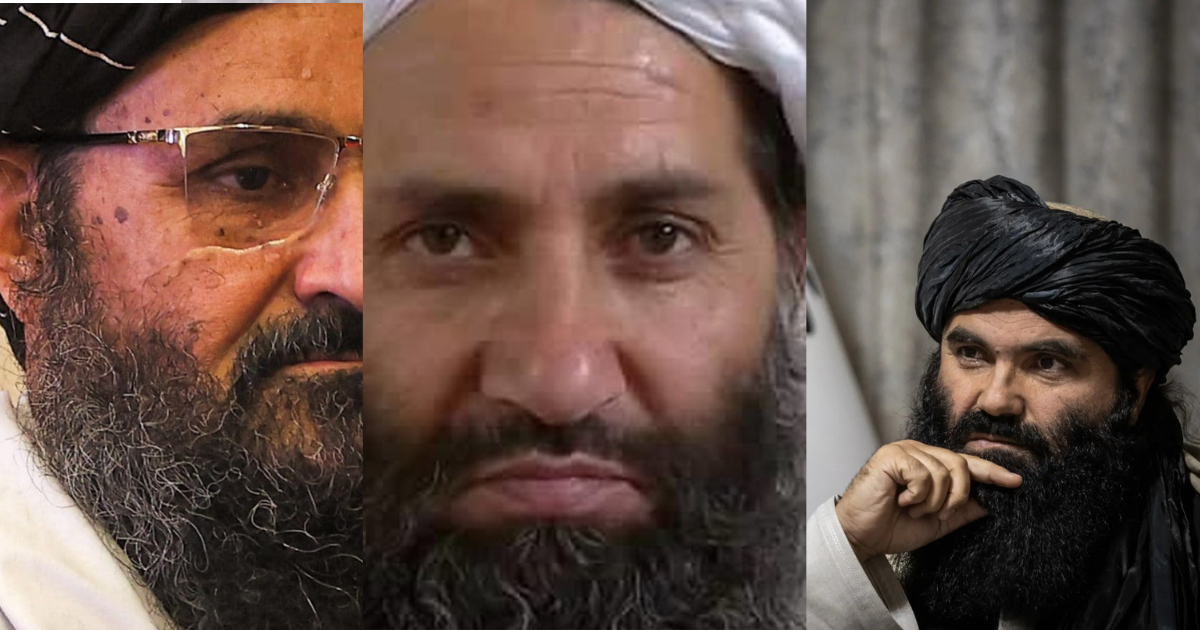
A quiet but significant fracture is emerging within the Taliban’s core leadership. While official statements portray unity, multiple indicators suggest a widening internal divide between Mullah Abdul Ghani Baradar, Sirajuddin Haqqani, and Supreme Leader Mullah Hibatullah Akhundzada. This split is shaping policy, governance practices, and the overall direction of the Islamic Emirate.
A Clash Over the Nature of Power and Governance
Mullah Baradar, the political face of the Taliban, pushes for external legitimacy, economic stability, and diplomatic engagement. His vision aligns with a more conventional model of governance—one that requires predictability, international relationships, and controlled reforms.
Sirajuddin Haqqani, backed by a powerful military-intelligence network, represents a different pole of authority. His influence stems from operational power: control of security forces, loyal commanders, and an independent tribal-militant base. In practice, this gives the Haqqani network a parallel center of power inside the Emirate.
Mullah Hibatullah, meanwhile, approaches governance from a position of religious centralism. He insists that ultimate authority must remain in Kandahar and be guided strictly by his interpretation of Islamic jurisprudence. His model prioritizes doctrinal purity over administrative flexibility.
In essence:
Baradar focuses on diplomacy,
Haqqani seeks security-driven dominance,
Hibatullah demands religious centralization.
Power Bottleneck in Kandahar
The most visible source of tension is Kandahar’s tightening grip over decision-making. As key political, economic, and administrative decisions became concentrated under Hibatullah’s office, both Haqqani and Baradar felt increasingly sidelined.
Internal sources have described quiet objections and pointed remarks in leadership meetings. Haqqani’s recent public statement warning against “power monopolization” is widely interpreted as a direct challenge to Kandahar’s dominance—an unusually bold signal in Taliban political culture.
A Silent Rivalry Between Baradar and Haqqani
Although Baradar and Haqqani share frustration with Kandahar’s control, their interests don’t perfectly align.
Baradar seeks to restore his early political role and strengthen the Emirate’s diplomatic posture.
Haqqani, by contrast, aims to expand his already formidable influence within the security and intelligence sectors.
The two tracks intersect but do not merge, forming a soft rivalry beneath the surface of Taliban cohesion.
Three Competing Sources of Legitimacy
The Taliban’s internal structure has effectively split into three competing centers:
– Kandahar — religious authority and final decision-making
– Haqqani network — military-security influence
– Baradar’s camp — political legitimacy and diplomacy
These factions draw their power from different constituencies, creating a triangular tension that complicates national governance.
Potential Implications for Afghanistan’s Future
The division may not cause an immediate collapse, but it is reshaping the internal balance of power. Likely outcomes include:
• stronger centralization of authority around Hibatullah,
• increased pressure from Haqqani to gain a formal political role,
• Baradar’s continued push for international engagement,
• ongoing friction that keeps the Emirate stable but internally strained.
The Taliban presents itself as united, yet within its upper ranks three competing visions of governance are silently battling for long-term control.