


China’s Strategic Engagement With the Taliban
China has become one of the most influential external actors shaping Afghanistan’s political and economic landscape. Since the Taliban’s return to power, Beijing has expanded its footprint through diplomacy, mining, security cooperation, and long-term strategic planning.
Beijing’s Practical and Security-Driven Approach
China’s engagement is rooted in realpolitik—focused on stability, counterterrorism, and regional connectivity.
China’s long-term vision across South and Central Asia
Beijing sees Afghanistan as a critical link between its Belt and Road Initiative (BRI) and broader regional ambitions.
China’s Security Priorities
Security remains Beijing’s top concern in Afghanistan.
Preventing Uyghur Militancy
China wants guarantees that Uyghur militant groups will not operate from Afghan soil.
Coordination through security agencies
The Taliban and Chinese officials have intensified counterterrorism dialogue, especially around the Wakhan Corridor.
China’s Economic Interests in Afghanistan
Afghanistan holds enormous untapped mineral wealth—attractive to Beijing.
Afghanistan’s Strategic Mineral Resources
Lithium, copper, rare earth elements, and iron ore are central to China’s industrial supply chain.
Potential for long-term extraction projects
Although large projects remain limited, several Chinese companies have already expressed interest in long-term mining deals.
Belt and Road Initiative (BRI) Expansion
Afghanistan’s geography makes it ideal for regional trade integration.
Crossroads of South Asia, Central Asia, and the Middle East
Afghanistan could link existing BRI corridors through rail networks, energy routes, and new trade pathways.
Taliban hopes for infrastructure-driven economic stability
Such projects offer the Emirate economic legitimacy and new revenue streams.
China’s Diplomatic Advantage
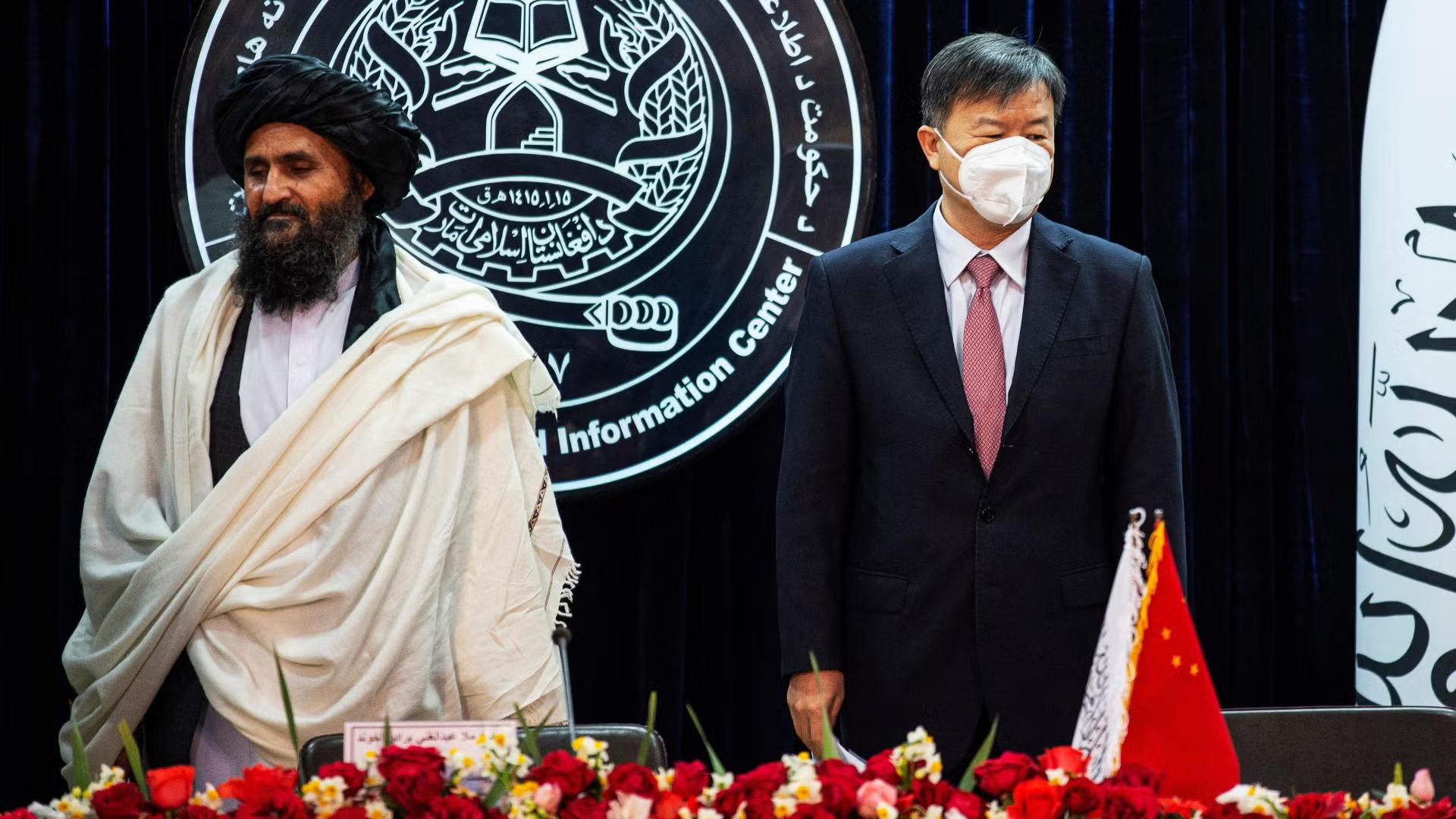
Beijing maintains deeper engagement with the Taliban than most major powers.
Appointment of China’s ambassador to Kabul
This move signals political commitment even without formal recognition.
Comparison with Western policies
Western engagement remains limited to humanitarian and counterterrorism channels.
How the Taliban View China
For the Islamic Emirate, China represents opportunity.
A path to economic and political legitimacy
No conditions on human rights or governance make China an appealing partner.
But expectations come with pressure
Security, stability, and predictable governance remain China’s minimum requirements.
Impact on Regional Balance
China’s expanding role reshapes Afghanistan’s geopolitical environment.
Pakistan welcomes Chinese involvement
Islamabad sees Beijing as a stabilizing and strategic partner.
Iran and Russia coordinate with China
They maintain cooperative frameworks around regional issues, including Afghanistan.
China vs. the United States in Afghanistan
Washington watches China’s rising influence cautiously.
A new arena of global competition
Afghanistan becomes another point where Chinese and U.S. interests collide.
Strategic implications
China’s presence reduces U.S. leverage in the region, shifting the balance of power.
Long-Term Outlook
China is positioning itself as Afghanistan’s dominant external partner.
Success depends on implementation
Major projects must move from announcements to actual investment.
China’s role will shape Afghanistan for years
Beijing’s approach could define Afghanistan’s political and economic future.